When you start exploring interactive boards, one thing becomes clear very quickly: there is no fixed “standard” price. Two panels that look almost identical in photos can have very different total costs once you add software, installation, training, and long‑term support. A key reason is who is buying them—schools or corporates—because their needs, environments, and usage patterns are very different.
Here’s a clear, practical breakdown of how and why the cost of interactive boards differs for schools versus corporates, and what you should consider before investing.
1. Same Hardware, Different Purpose
At a basic level, an interactive board is a large, touch-enabled display that replaces a traditional whiteboard, projector, or basic TV. However, the way it is used in a classroom versus a boardroom is not the same at all.
- Schools focus on daily teaching, student interaction, and curriculum support. The board is a frontline teaching tool that must be robust and simple to use.
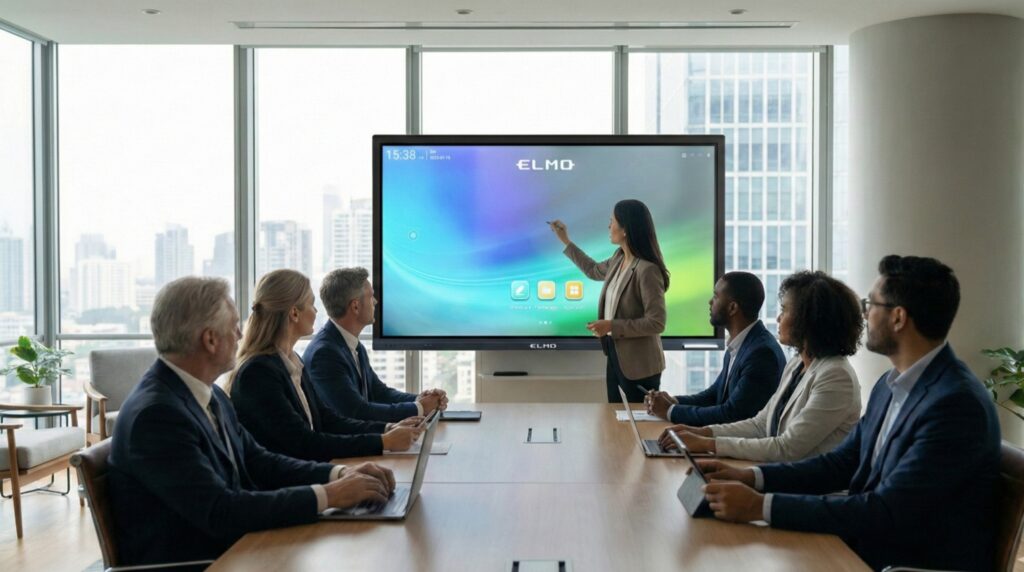
- Corporates focus on presentations, hybrid meetings, training, and collaboration across teams and locations. The board becomes a communication and decision-making hub.
Because the purpose is different, the configuration—especially software, connectivity, and accessories—changes, and so does the cost.
2. Hardware Pricing: What You Actually See
Most schools and corporates tend to choose similar sizes—usually 65″, 75″, or 86″—based on room size and viewing distance.
Typical trends:
Schools
- 65″: Smaller classrooms or labs
- 75″: Standard classrooms
- 86″: Large classrooms or multi-purpose halls
Corporates
- 65″: Huddle rooms and small meeting rooms
- 75″: Medium meeting rooms
- 86″: Boardrooms and training rooms
Hardware cost is influenced by:
- Resolution (usually 4K as standard now)
- Brightness and anti-glare coating (important for well-lit rooms)
- Touch accuracy and number of touch points
- Inbuilt operating system (Android, Windows OPS, or both)
- Built-in speakers, microphones, and connectivity ports
On paper, a school board and a corporate board of the same size may have similar base pricing. The big differences appear once you add software, services, and integration.
3. Software & Licences: The Silent Cost Multiplier
The real value of an interactive board comes from the software it runs. This is also where education and corporate use cases diverge sharply.
For Schools
Education-focused interactive boards usually include or bundle:
- Interactive whiteboarding tools (pens, shapes, rulers, protractors, graph backgrounds, etc.)
- Lesson creation and annotation software
- Subject-wise templates for maths, science, languages, and more
- Classroom tools like timers, screen freeze, spotlight, and multi-window display
In many cases, these are:
- Provided under education licences
- Either perpetual or long-term with minimal recurring fees
This keeps the cost predictable and easier to approve within annual school budgets.
For Corporates
Corporate boards are built around digital collaboration. They’re often integrated with:
- Video conferencing platforms like Microsoft Teams, Zoom, or Google Meet
- Enterprise whiteboarding and brainstorming tools
- Wireless presentation systems for laptops, tablets, and mobiles
- Device management and security software for IT departments
Here, you’re likely to encounter:
- Annual or monthly subscription fees
- Possible per-room or per-user licensing
- Paid upgrades for advanced features like recording, analytics, and room booking
Even if the hardware is comparable, these recurring software and service costs can make corporate interactive boards more expensive over a 3–5 year period.
4. Installation & Integration: Simple vs Complex Environments
Mounting a screen on a wall is only part of the story.
In Schools
Typical classroom installation is relatively standard:
- Wall mounting at a safe, ergonomic height
- Basic cable management
- Connection to school LAN/Wi‑Fi
- Sometimes pairing with an existing CPU or simple OPS
Because many classrooms are similar, installation can be replicated at scale, reducing per-board installation costs. Schools may also negotiate installation as part of a bulk purchase.
In Corporates
Corporate rooms are more varied and often more demanding:
- Integration with ceiling microphones, external speakers, existing projectors, or additional displays
- Table connectivity (HDMI, USB-C, LAN) through floor boxes or cable cubbies
- Room control systems (touch panels to control lights, blinds, and AV)
- Acoustic and camera positioning considerations for hybrid meetings
This often requires professional AV integrators, site surveys, and custom solutions. As a result, the installation and integration costs per room for corporates can be significantly higher than for schools, even when using similar-sized displays.
5. Training, Support & Warranty: Different Expectations
Interactive boards are long-term investments, so training and support matter.
Schools
- Need teacher training sessions focused on everyday use: lesson delivery, annotation, saving notes, and basic troubleshooting.
- Prefer longer warranties (often 3–5 years) and quick on-site service.
- Frequently benefit from group training workshops and simple, easy-to-learn interfaces.
Corporates
- Need training for multiple user roles: presenters, trainers, leadership teams, and IT admins.
- Often require SLA-backed service, remote monitoring, and integration support.
- Expect the solution to align with broader IT and security standards.
Vendors may include training and extended warranty in education bundles for schools, while corporates might choose premium support contracts, adding to the long-term cost.
6. Total Cost of Ownership: Looking Beyond the Price Tag
To understand true cost, it’s useful to think in terms of Total Cost of Ownership (TCO) over 3–5 years.
For Schools, TCO usually includes:
- Hardware (panel + mount/stand)
- Education software (often bundled or low-cost)
- Standardized installation across many classrooms
- Teacher training and refresher sessions
- Warranty and occasional repairs or replacements
Because many of these costs are front-loaded and predictable, schools can plan budgets more comfortably.
For Corporates, TCO usually includes:
- Higher-spec hardware in key rooms
- AV integration (cameras, sound systems, microphones)
- Ongoing software and conferencing subscriptions
- Professional installation and configuration
- User and admin training
- Device management, updates, and security compliance
This means corporates often deploy fewer boards overall, but with a higher investment per room.
Conclusion
Interactive boards for schools and corporates may look similar on the surface, but they are designed, configured, and priced for very different realities.
- Schools typically pay less per unit because they benefit from education pricing, standardized installations, and bundled teaching software. Their priority is to stretch limited budgets across as many classrooms as possible while improving teaching and learning.
- Corporates often invest more per room because they need fully integrated collaboration hubs with conferencing, security, device management, and AV integration. Their priority is to enable seamless communication, hybrid work, and professional presentations.